Community Magazine · First Issue 5787 · September–October 2026
Some things aren't taught in a classroom
At Geulim, they're learned every single day
A Lego room that children built themselves. A kitchen where they
learn far more than cooking. Elections run by students, an olive
harvest in the park, and a schoolyard that turns into a meeting
place for the whole neighbourhood.
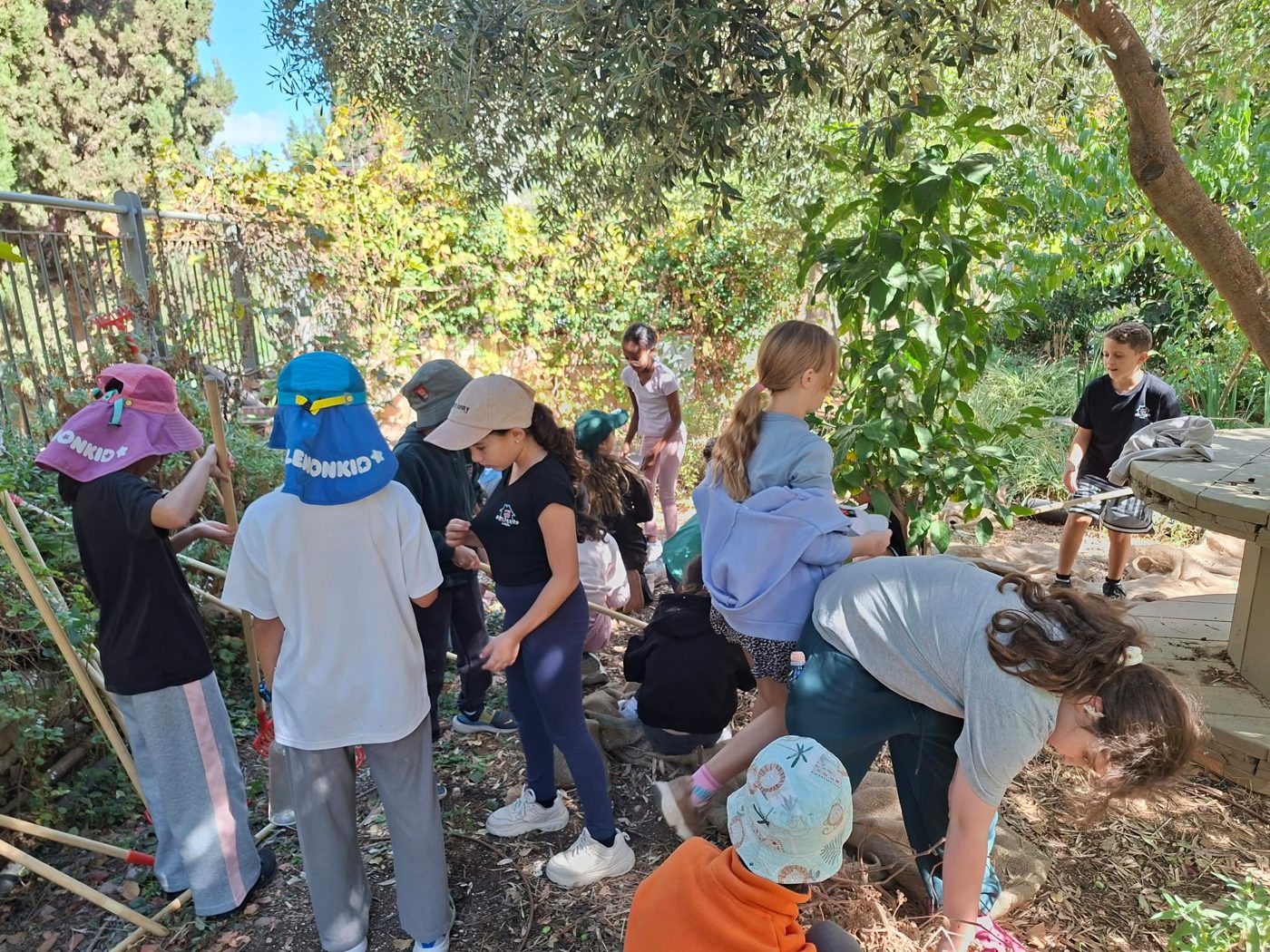
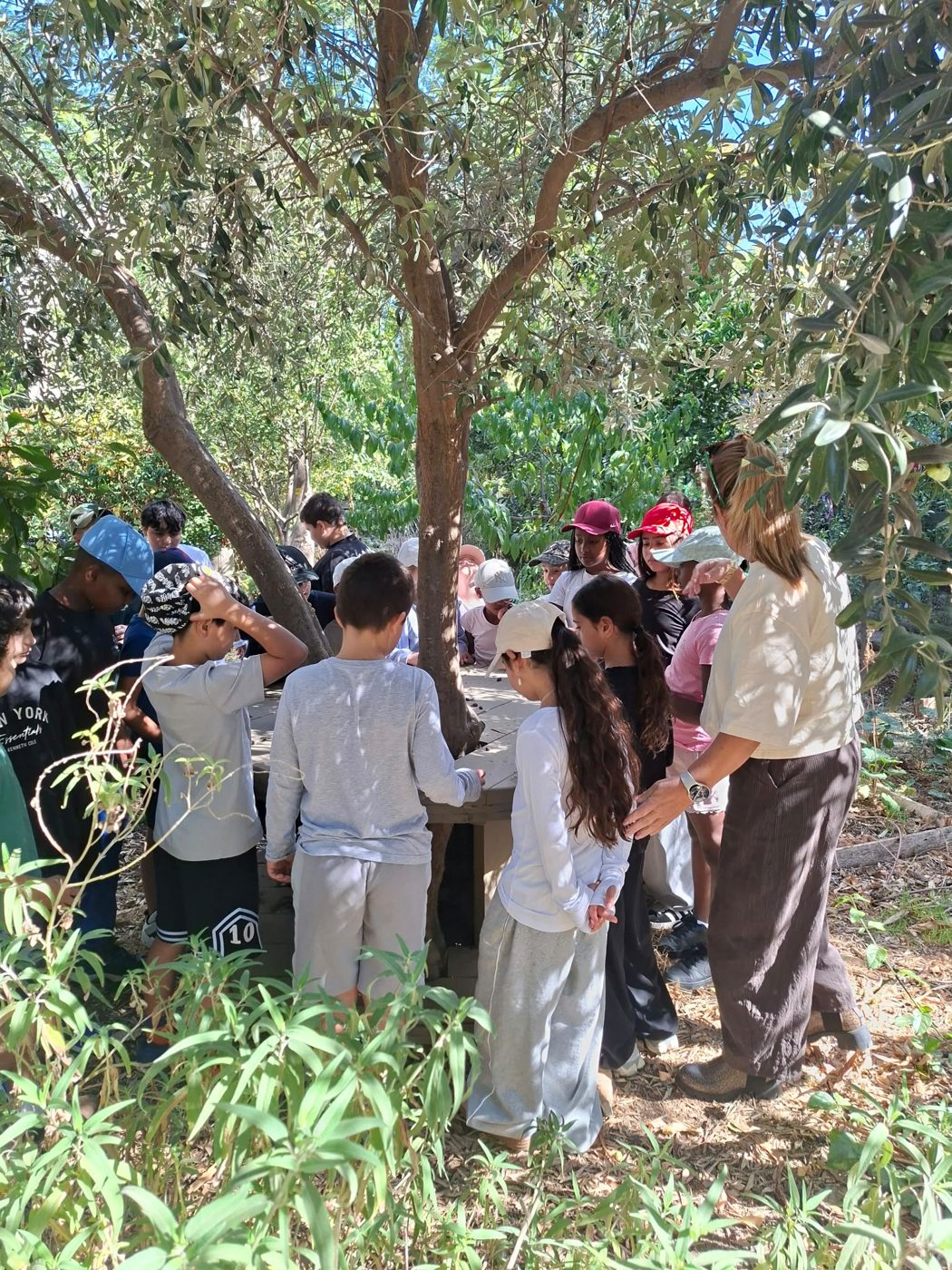
Grades 3 and 4 at the olive harvest in Lifshitz Park, close to the school
Quite a lot happened at Geulim over the past two months. Some of it
big, some of it small, but almost all of it shares something: children
who don't just take part but also create, a staff that believes in a
different kind of learning, and parents who choose to be part of what
happens here.
So what is actually going on at Geulim?
01
Children get things done here
Who needs grown-ups when you have Grade 5?
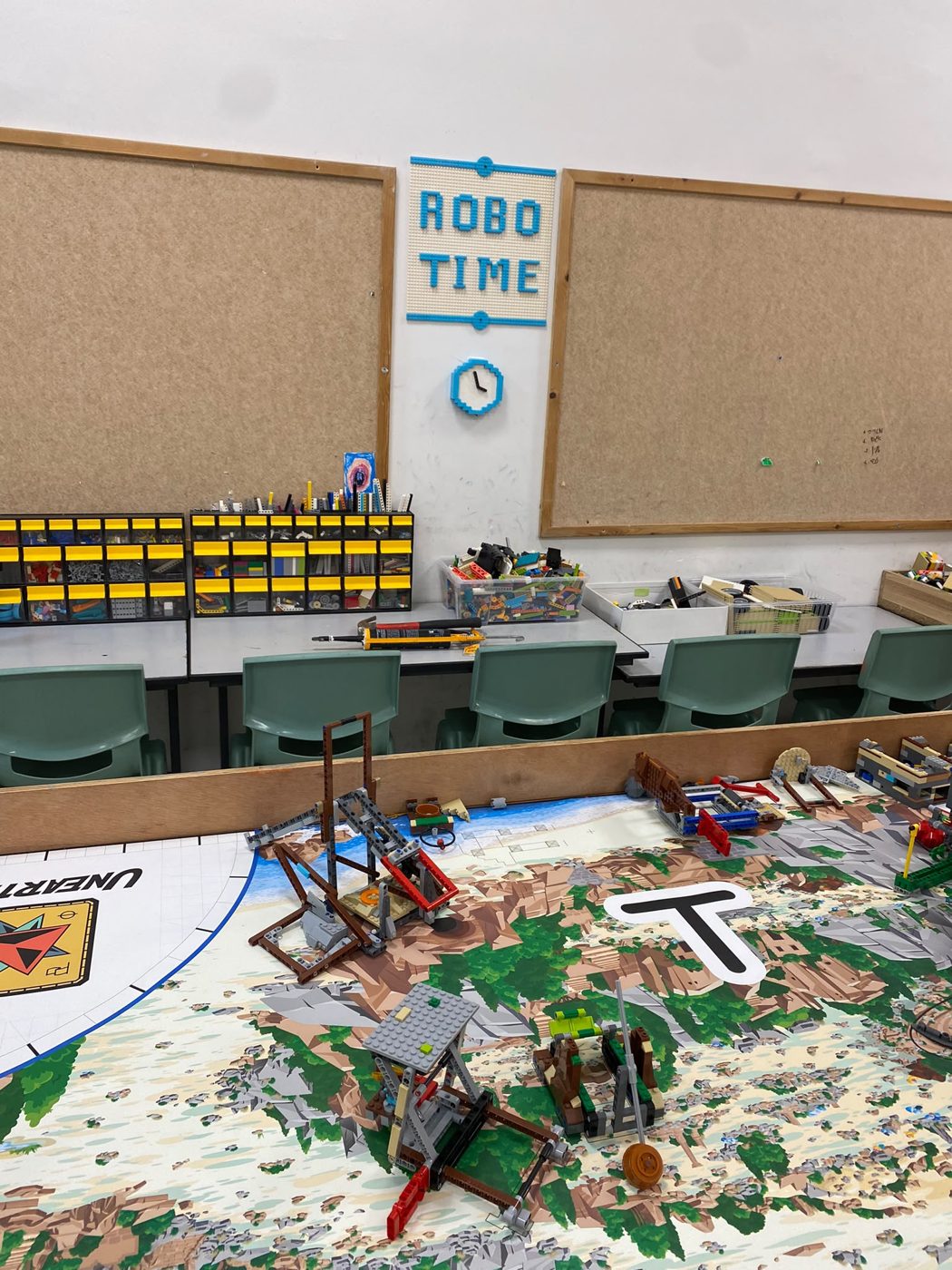
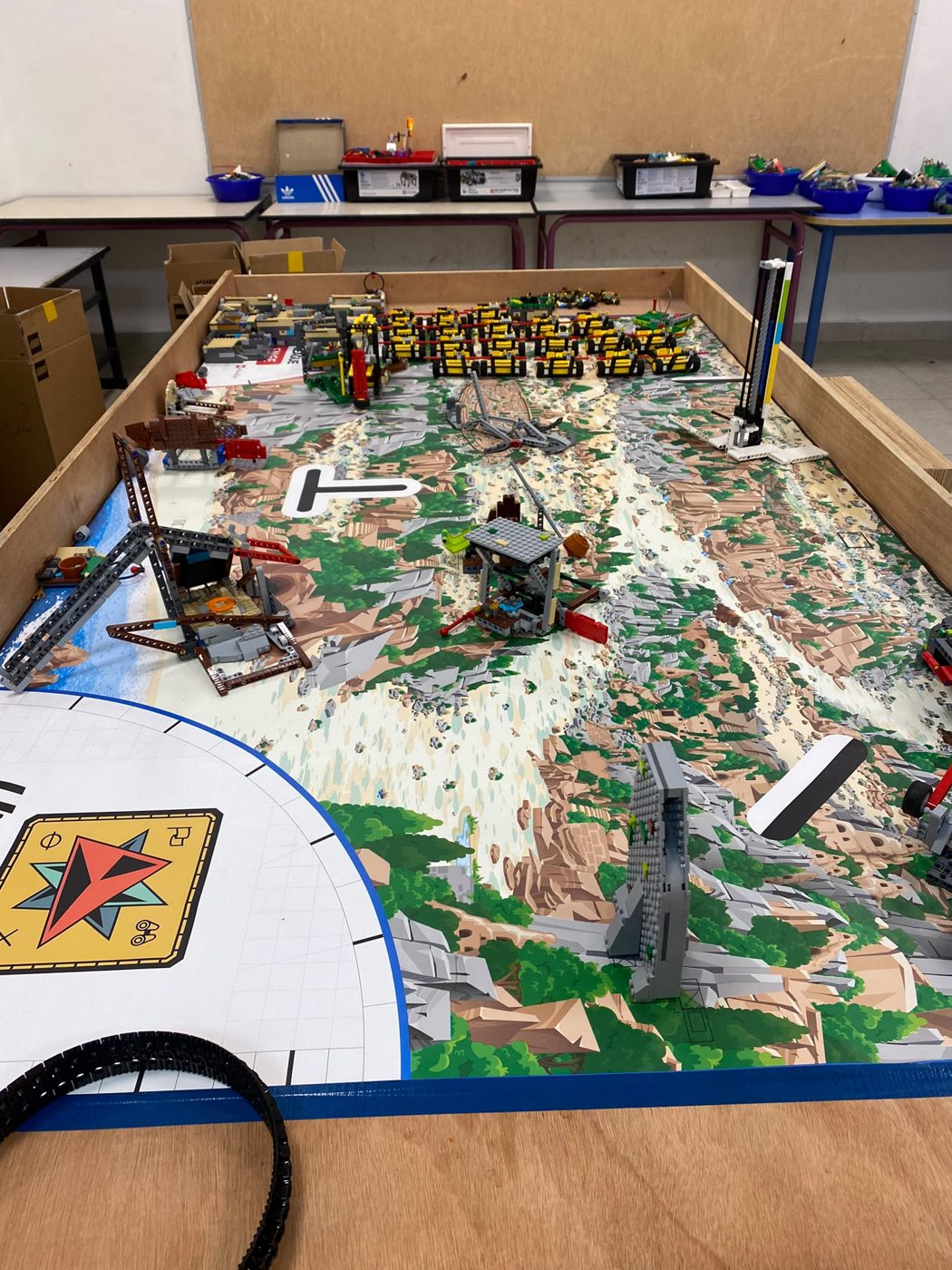
Thousands of Lego pieces, one room, and a group of children who decided to turn an idea into reality.
The students of 5A planned, organised and built a new Lego room at
the school themselves. They thought about the space, sorted the
pieces and prepared a place where children can build, create, play
and take on challenges.
But the room has another purpose too. It is meant to be somewhere
you can go when you need a little quiet, time to yourself, or a
break from the noise.
Sometimes the best way to teach children responsibility is simply to
give them responsibility.
Democracy doesn't stay inside the textbook
What do elections look like when children run them?
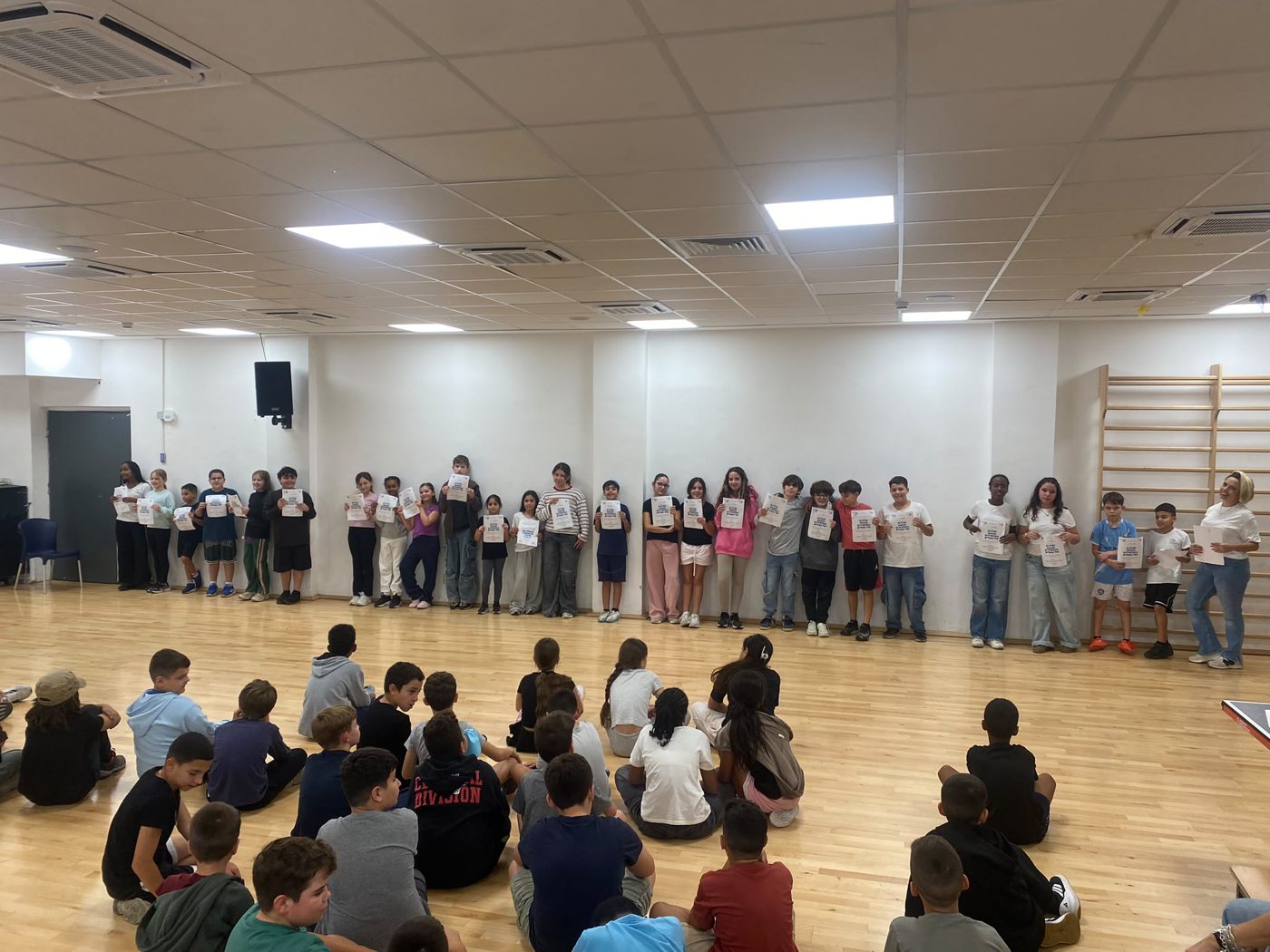
The elected students receive their certificates in front of the whole school
At Geulim the answer is simple: a ballot committee made up of 6A
students, an orderly vote, a count of the ballots and an
announcement of the results.
Students in grades 4 to 6 chose their representatives to the student
council, with the entire process led by children. The elected
representatives meet every week with Aviv, who leads the council,
and begin to learn what it means to represent others.
Because democracy is not only the right to vote. It is also the
ability to listen, to make decisions and to carry responsibility.
Small bottles. Big idea.
What connects an empty bottle, sustainability, and helping families in the community?
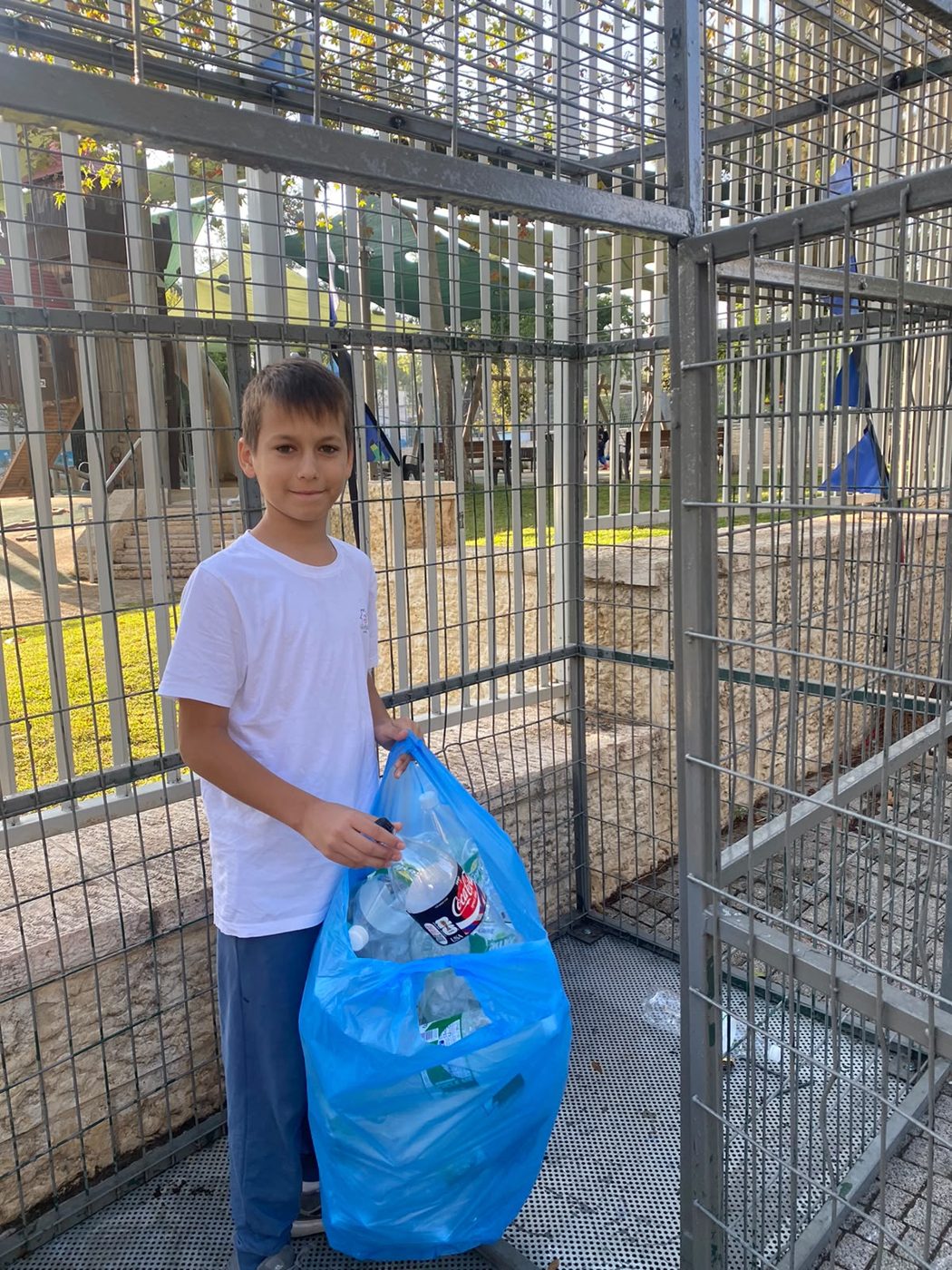
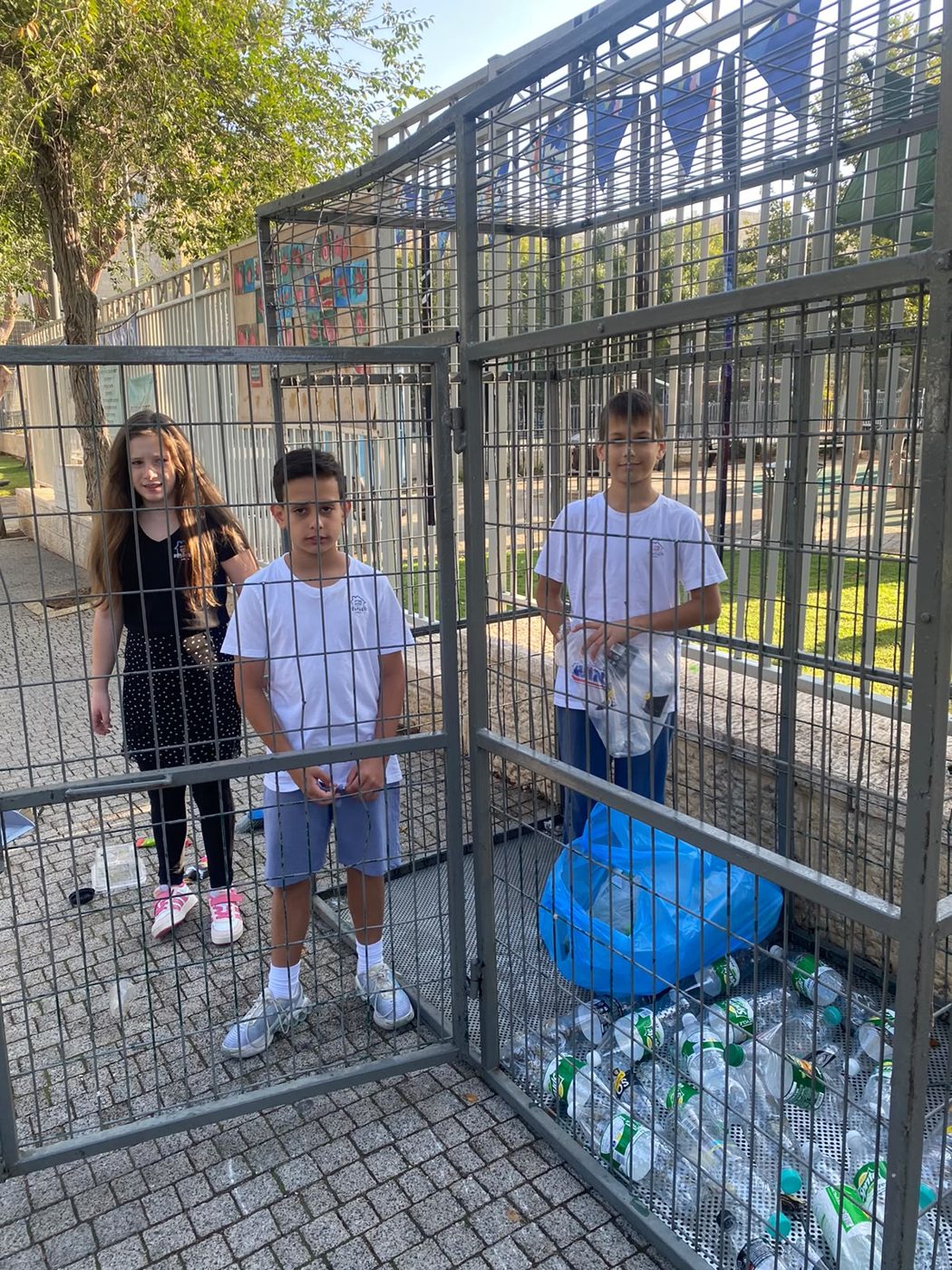
This year Geulim students began collecting bottles for recycling. A
collection bin was placed next to the school, and the children bring
the bottles, sort them and gather them. The money from the deposits
will go to families in need of support.
There is a whole lesson here that needs no blackboard and no
notebook. About consumption, the environment, giving, and the fact
that even a small action can do something good for someone else.
Thank you to Sima Cohen, mother of Michael in Grade 4, who arranged
the collection bin for us.
02
Who said learning only happens in class?
Flour, water and a little independence
Some lessons end in a notebook. Others end in a loaf of challah.
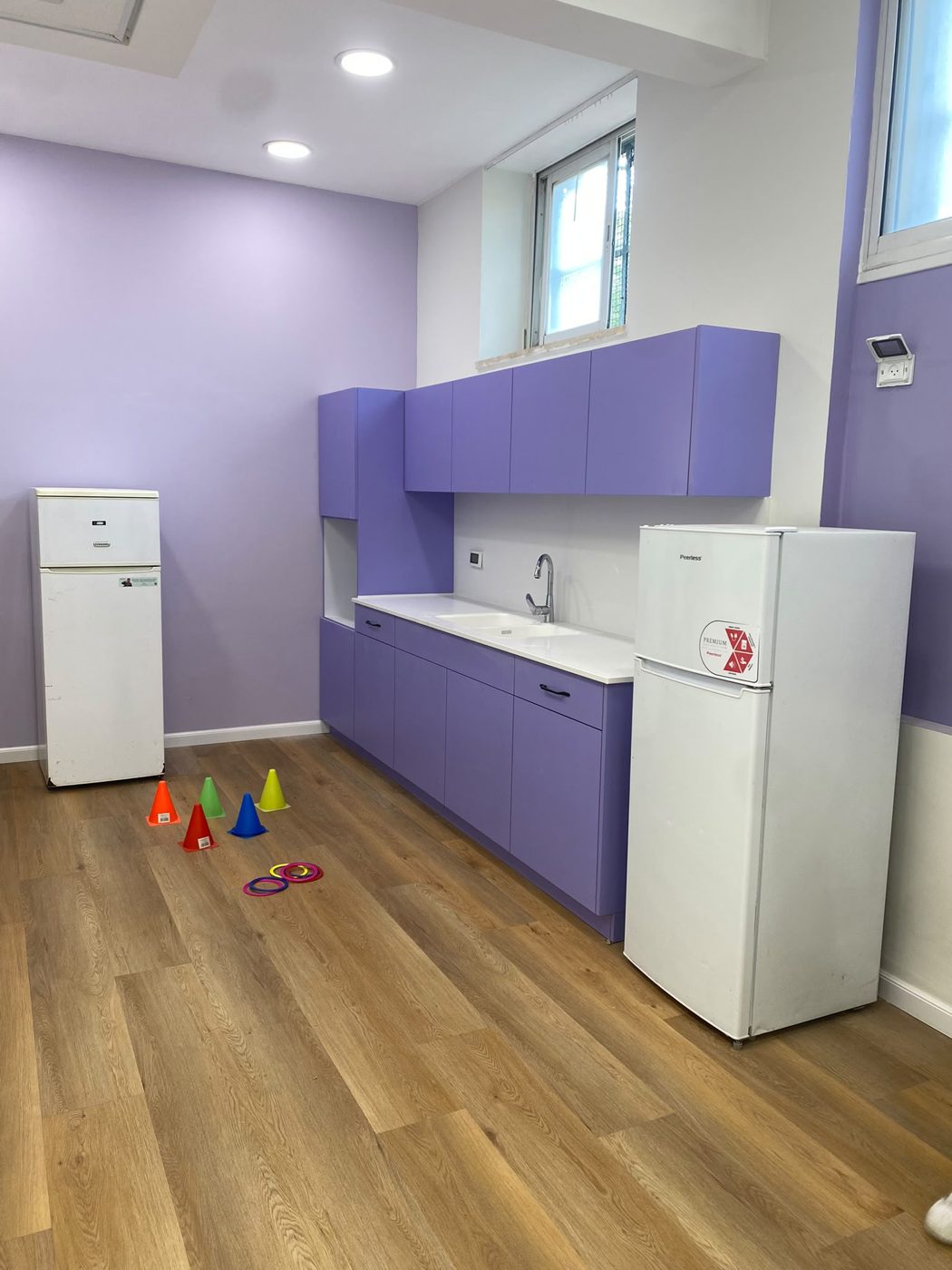
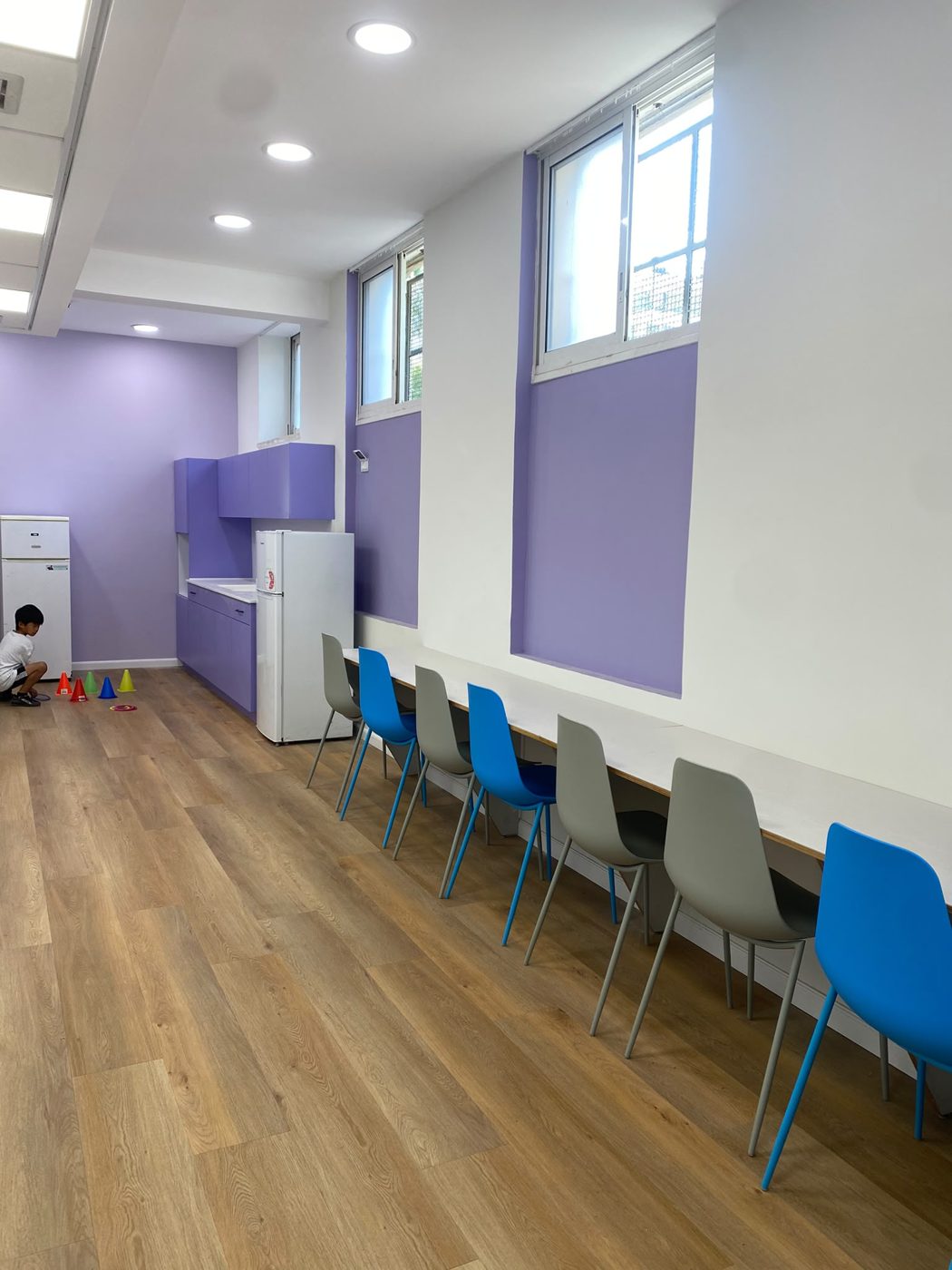
Geulim's new kitchen opened in October, and on the very first day
the younger children baked a cake and the older ones made challah.
But the story is not what came out of the oven.
In a kitchen you have to plan, read instructions, measure, divide
tasks, work together, deal with mistakes and clean up after
yourself. These are skills that show up in almost every area of life.
That is why the new kitchen isn't reserved for special occasions.
Baking and cooking lessons will be part of the school routine. And
sometimes, at the end of the lesson, you also get to eat what you
learned.
Do you have dairy or parve kitchen utensils you no longer use? We
would be glad to receive them at the school office.
A classroom without walls
The trees, the olives and the open space all became part of the learning
In October, students in grades 3 and 4 went out to Lifshitz Park,
near the school, for an olive harvest. The trees, the olives, the
season and the open space all became part of the learning.
This year two of the school's homeroom teachers are taking part in
professional training on outdoor learning, as part of expanding the
ways to learn outside the classroom.
Because sometimes you have to step outside the school to discover
how much there is to learn right next to it.
And you can learn in completely different ways
Not every child is interested in the same things, and not everyone
discovers their strengths in the same place.
At Geulim you can find children exploring robotics and high tech,
children finding their voice in the choir or the school band, and
others who connect through sport, languages, thinking and creating.
To think, explore and createRobotics · High tech · Unicorn · Thinking challenges · Entrepreneurship space
To find a voice and leadLeadership centre · Choir · School band · Ladino lessons
To learn through movement and doingSports teams · Adventure cycling · Therapeutic gardening
To open more doors to learningEnglish support groups
This variety matters, because sometimes a child needs to encounter
one new field in order to discover something new about themselves.
03
A community with meaning
This is how you welcome a new family
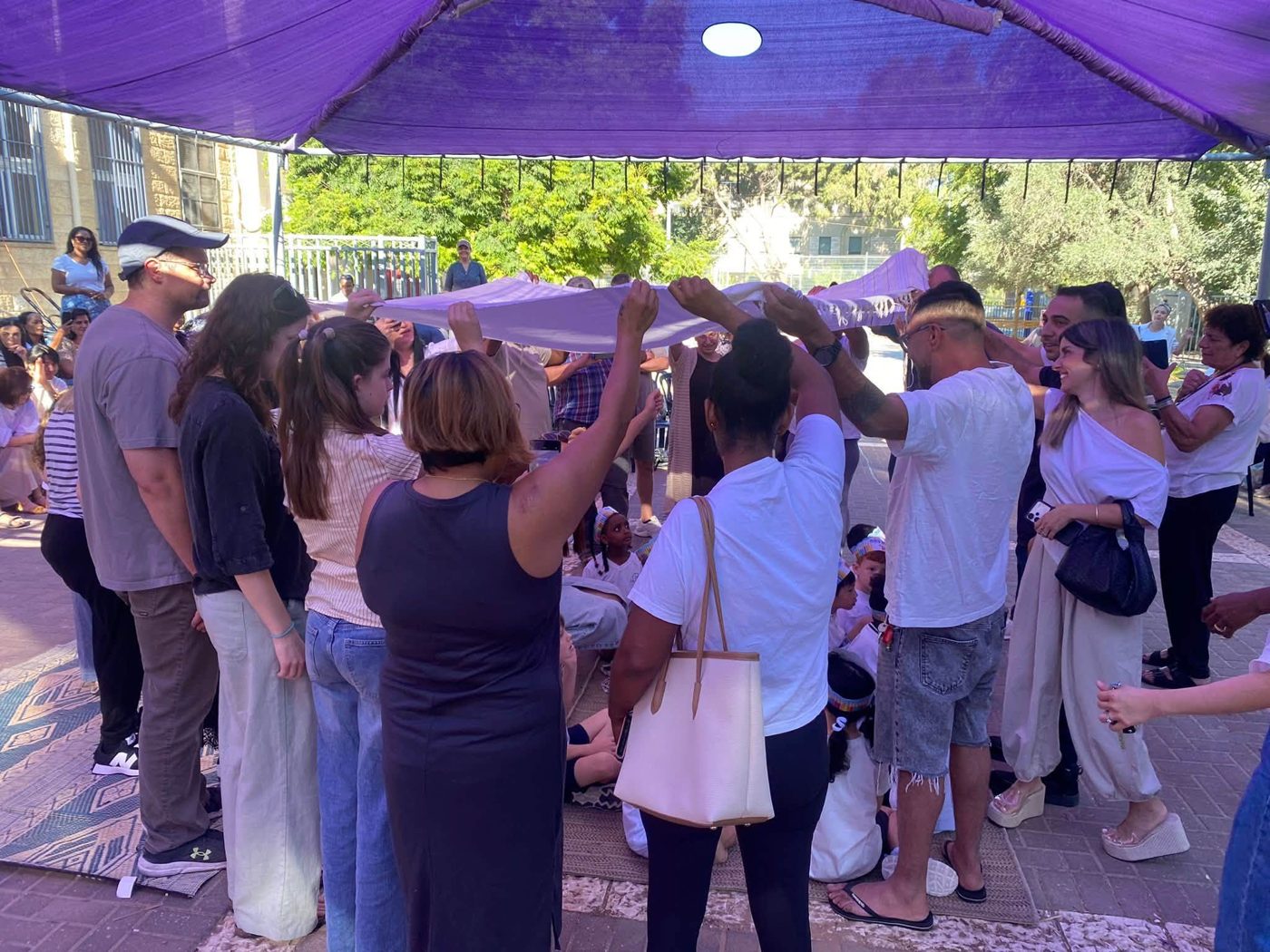
On the first day of school, parents hold a canopy of prayer shawls above the Grade 1 students
On the first day of school, parents stood and held a canopy of
prayer shawls above the Grade 1 students. The children walked in
beneath it, and the senior citizens' choir of the community centre
sang with us at the opening ceremony.
It was a small, lovely moment that says something big about Geulim.
On their very first day at school, the children did not only meet a
new classroom and a new teacher. They met a whole circle of people
who came for them.
Welcome to the new families of Geulim.
A school for a whole neighbourhood
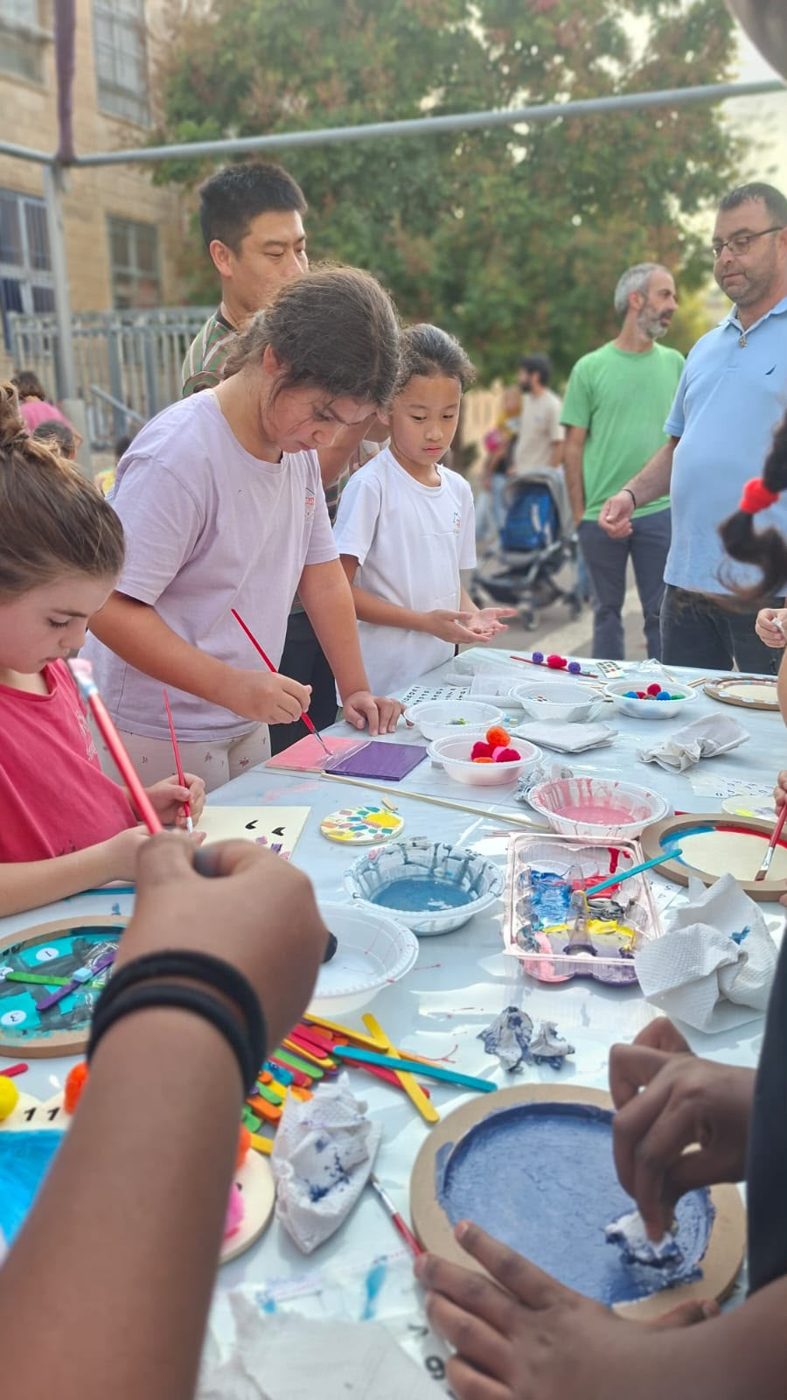
What does it take to create a good afternoon in a schoolyard?
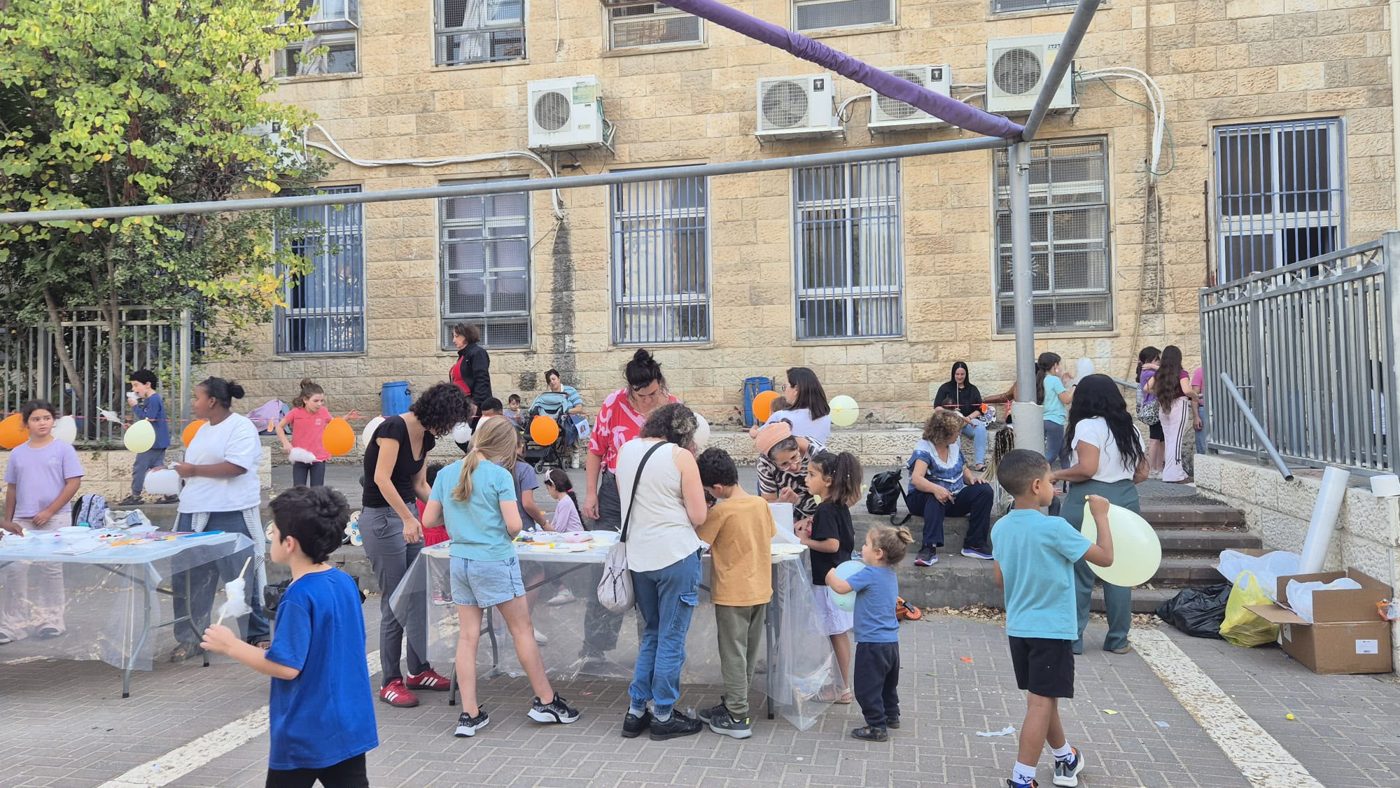
The yard filled with families from Baka, Arnona and the surrounding area
A few craft tables, krembo, children, families, a winter show, and
plenty of parents willing to take part.
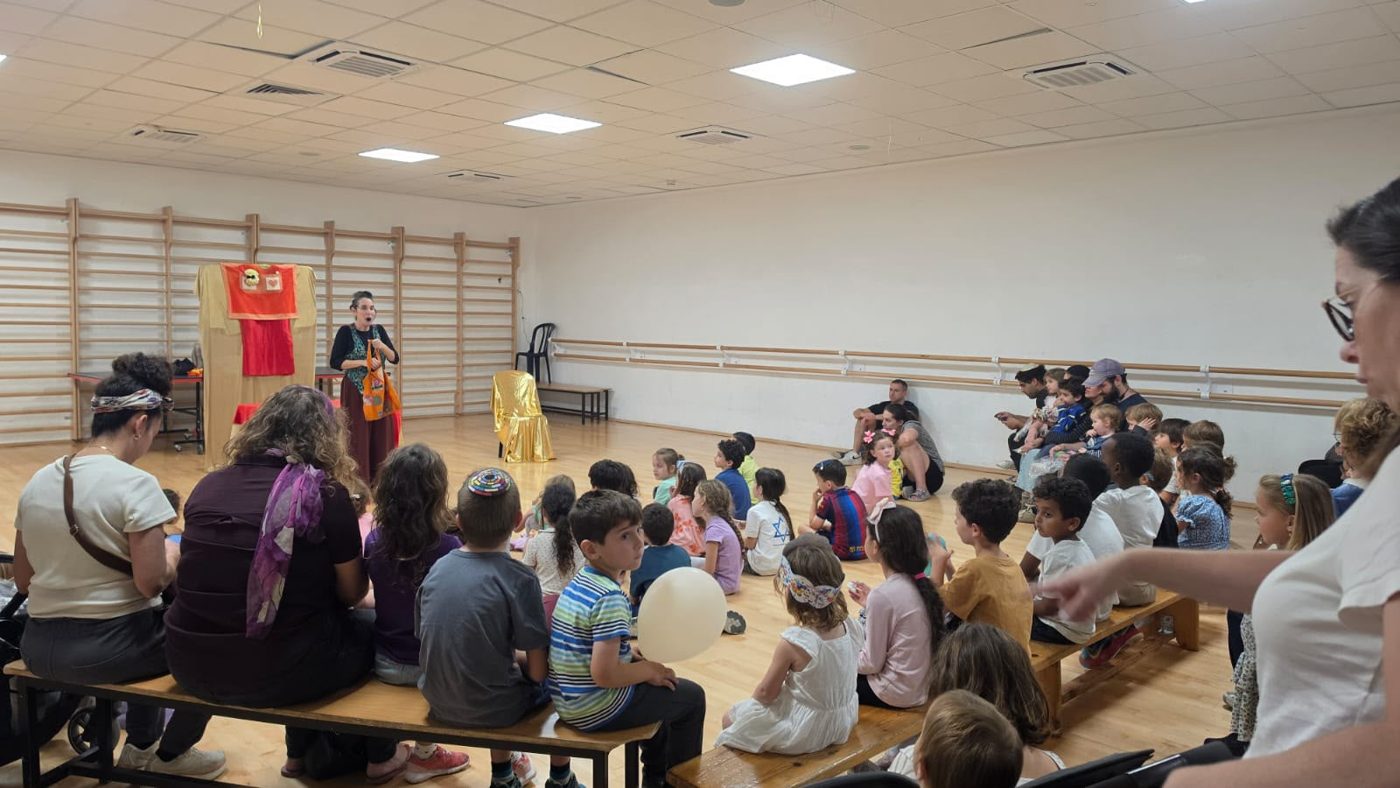
On 22 October we said goodbye to summer at the Geulim community
winter clock party. There were crafts, surprises and a winter show
by the actress and creator Shani Weisman. But the loveliest thing of
all was the people who came: not only families from the school, but
also families from Baka, from Arnona and from the surrounding area.
Because a neighbourhood school can be far more than the place you
send your children in the morning. It can be a place where
neighbours meet, where families get to know one another, and where a
community begins to form.
A growing and influential parents' council
At the start of the year we asked Geulim parents to tell us what
they are good at, what they know how to do and in which areas they
could contribute. Not because the school lacks professionals, but
because there is so much knowledge, experience and ability already
present among us. At the first parents' meeting, on 8 September, we
began mapping those strengths.
The parents' council also expanded this year, with additional
parents from every grade and from special education. Avia
Cohen Kosher was elected for a second year as chair of the parents'
council.
At the same time we are promoting an approach built on action
groups, so that parental involvement does not rest on a small number
of parents but allows anyone who wishes to take part, even in
something small.
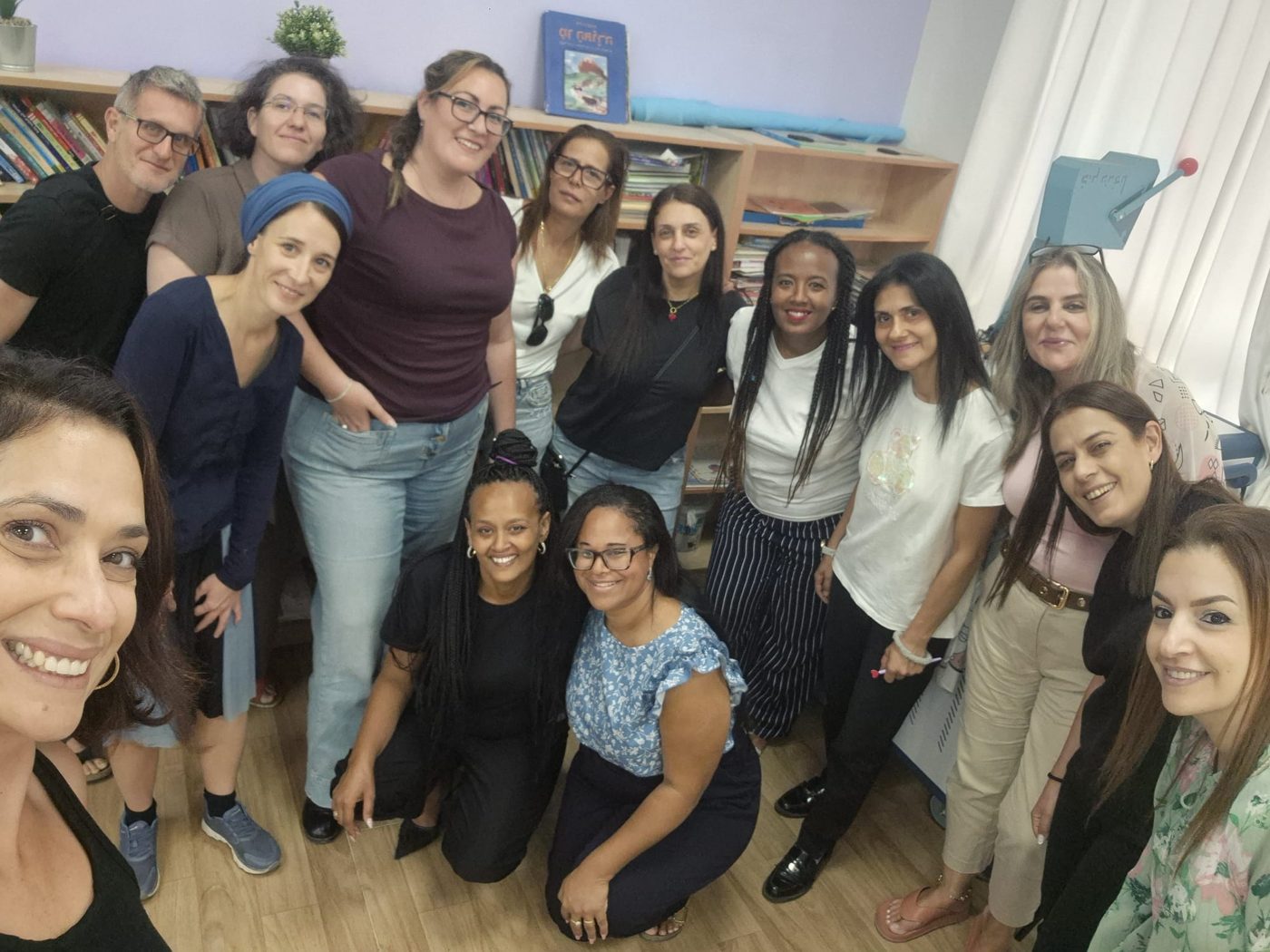
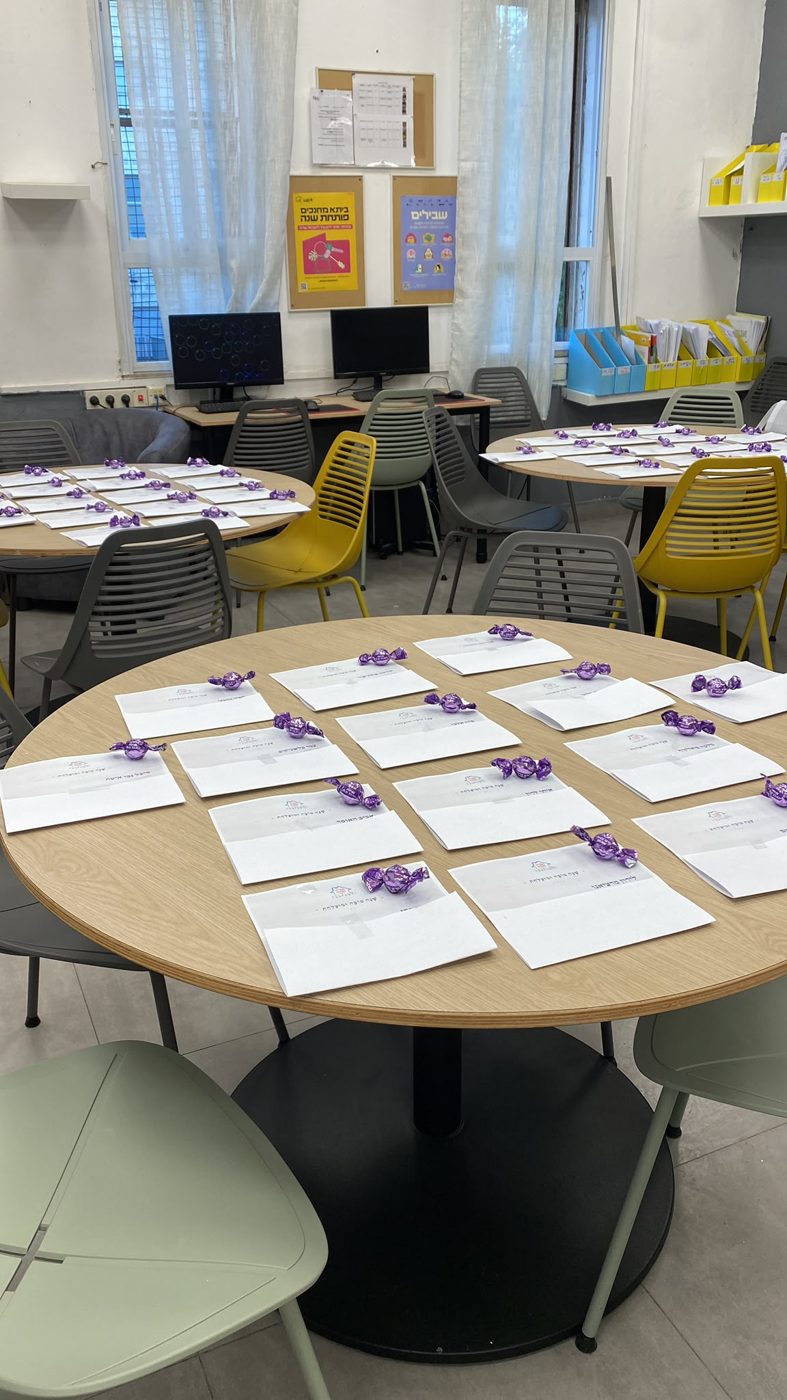
And at the beginning of the year a surprise was waiting for the
teaching staff: personal thank you letters prepared by the parents
and left in the staff room. Because partnership also begins with
knowing how to say thank you.
04
Things worth talking about
What can a marshmallow teach us about the new year?
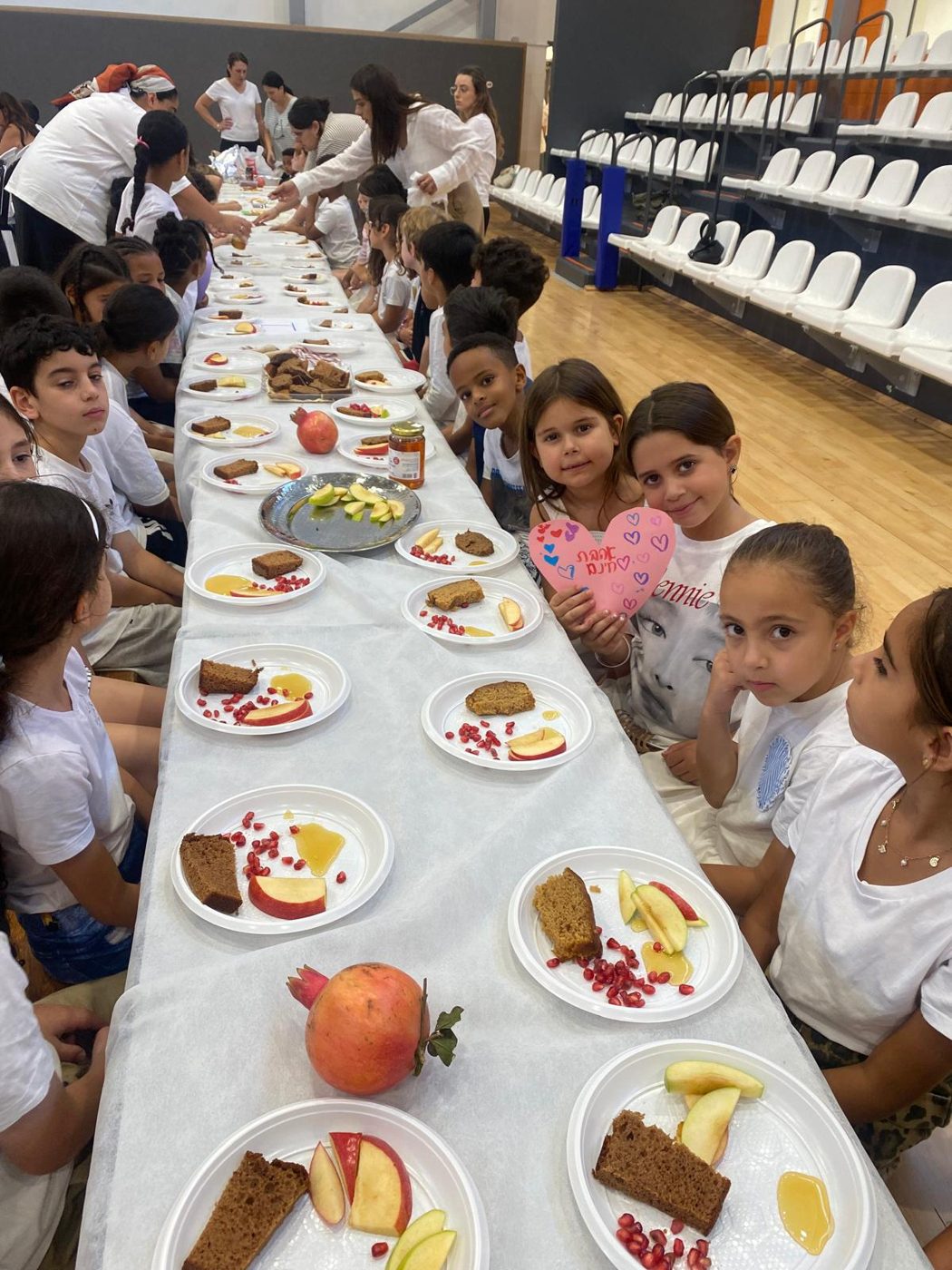
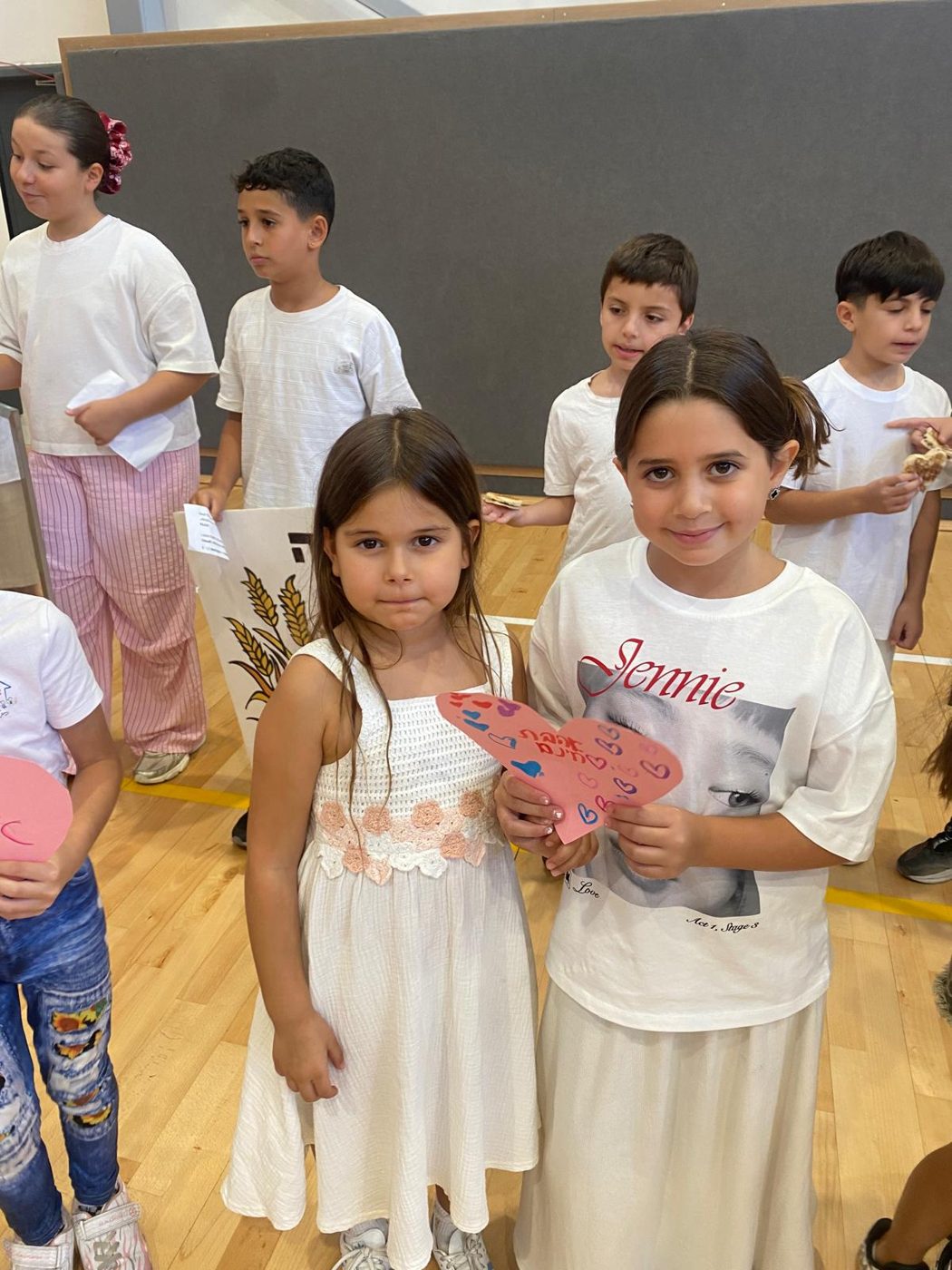
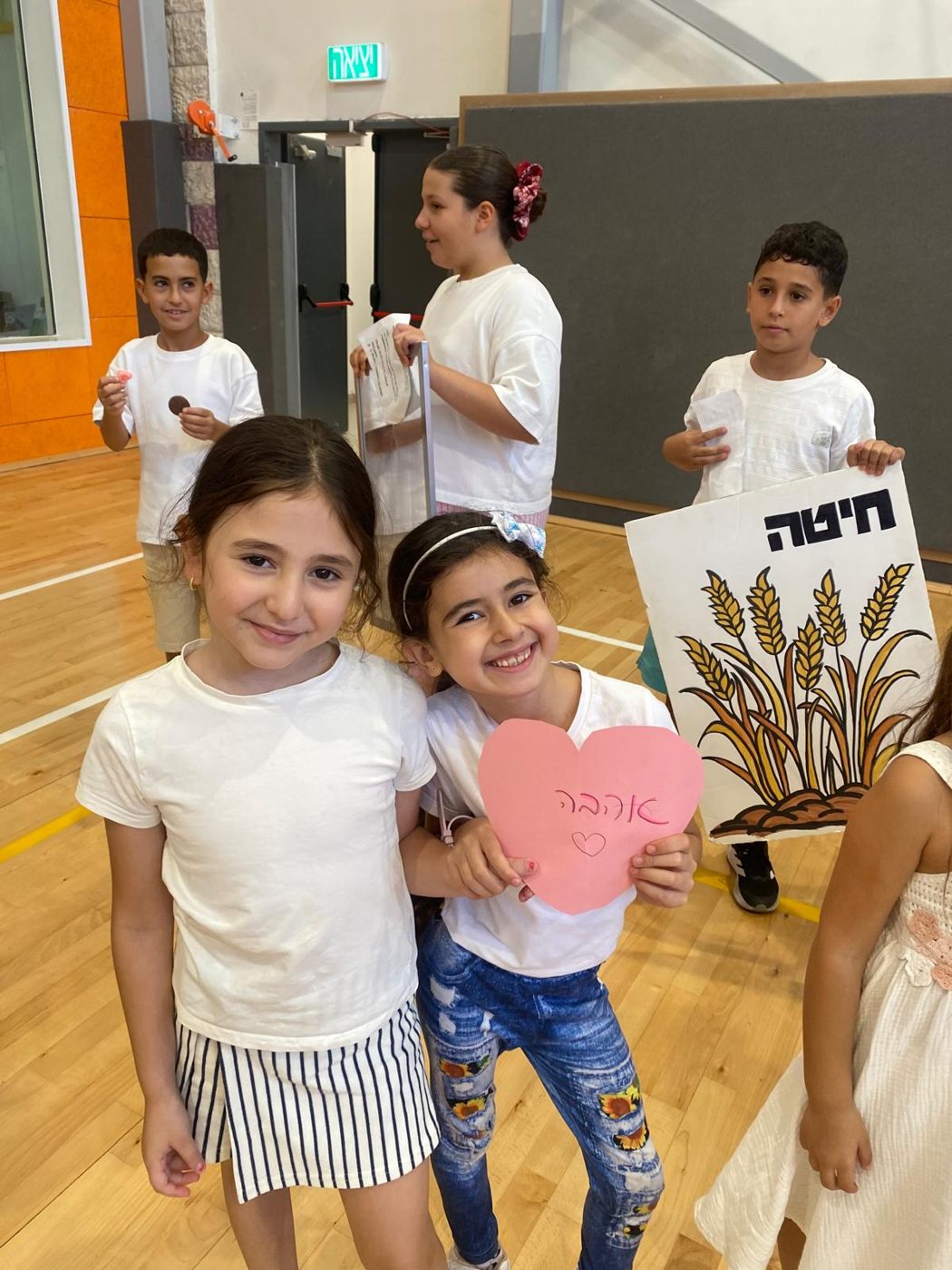
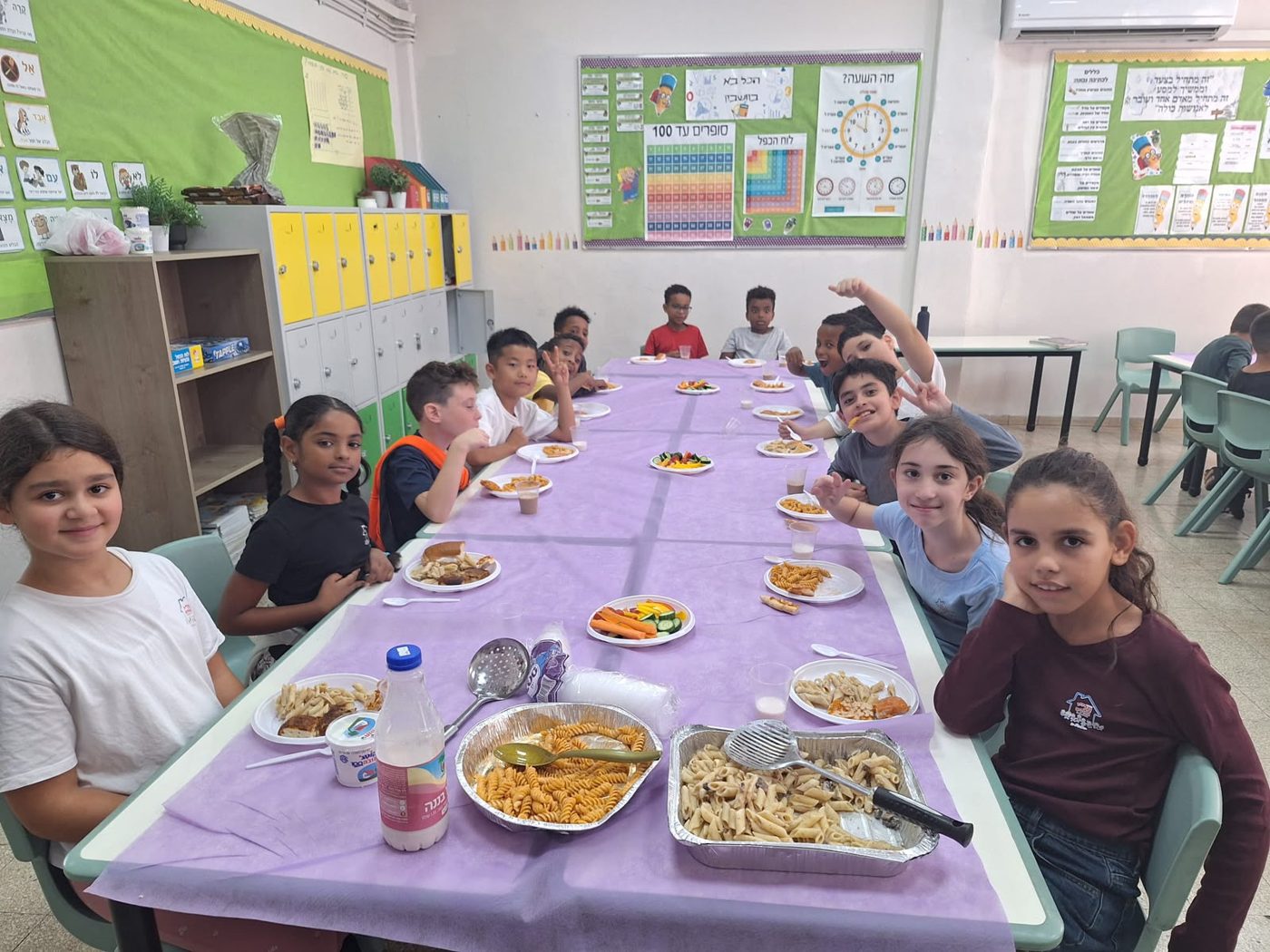
All of Geulim's students around one long table at the school Rosh Hashanah seder
At the school Rosh Hashanah seder, all of Geulim's students sat
around one long table, dressed in white. But this year the symbols
of the holiday were not only apples, honey and pomegranate. The
children were asked to bring objects from their own world and turn
them into a blessing for the new year.
And so a few ideas were born that we might not have thought of ourselves:
A marshmallow · that we have a flexible and sweet year
A magnet · that we draw good things towards us
A plate · that we have success (a play on the Hebrew words)
A rope · that we know how to tie good bonds of friendship
A mirror · that we know how to look at ourselves and recognise our strengths
It was an original way to talk about wishes, values and new
beginnings, and above all to let the children bring their own
thoughts to the holiday table.
Memory that grows
How do you speak with children of different ages about difficult
events, about loss and about remembrance?
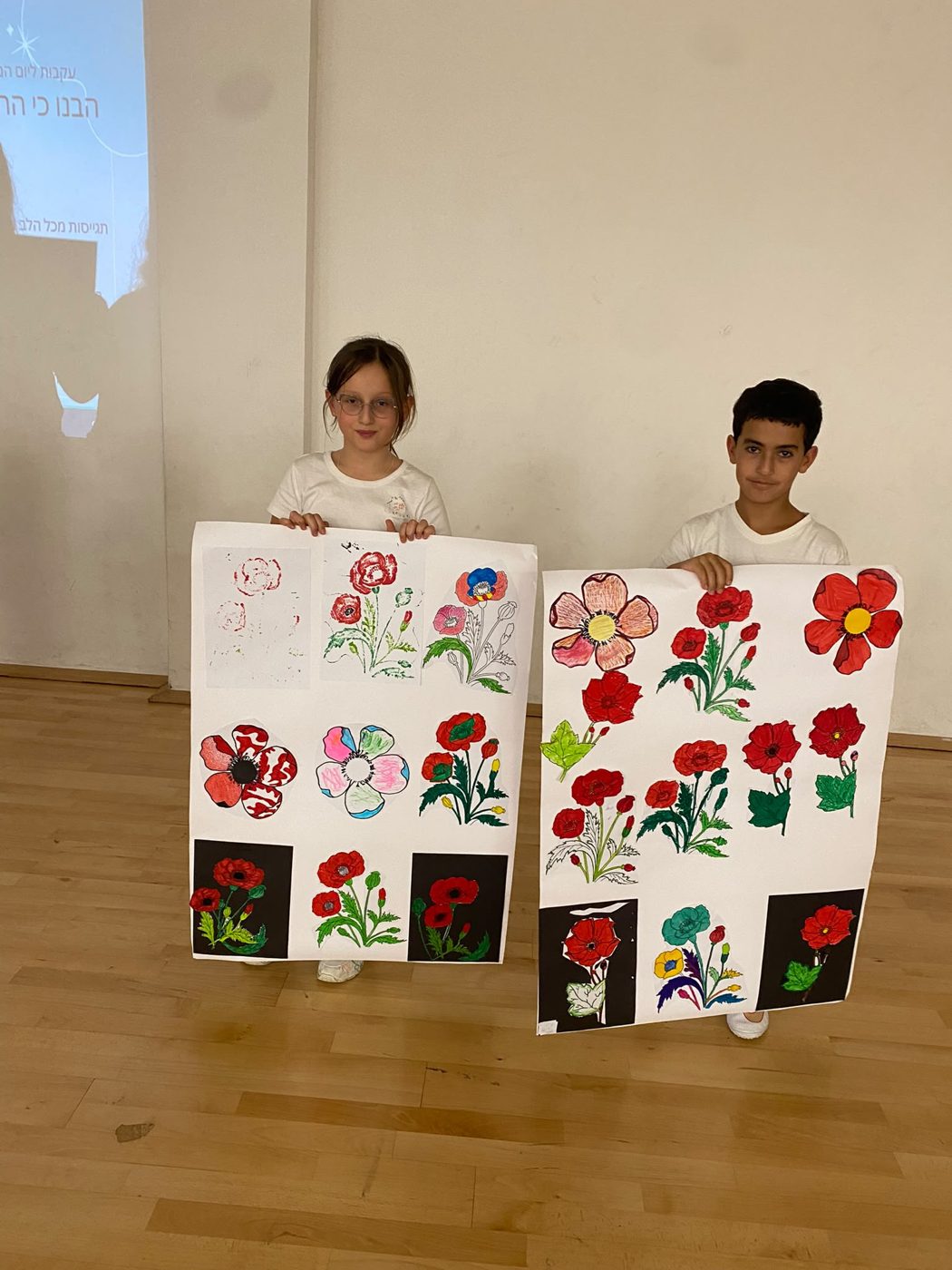
The anemone as a symbol of growth and renewal, in Grade 5's work
On 5 October the school devoted a day to age appropriate discussion
and activity, led by the homeroom teachers who know the children
closely. Each grade worked on a different theme:
Grades 1 and 2 · mutual responsibility, the ability to help others and the option of asking for help
Grade 3 · a grade wide box of hugs filled with encouraging words
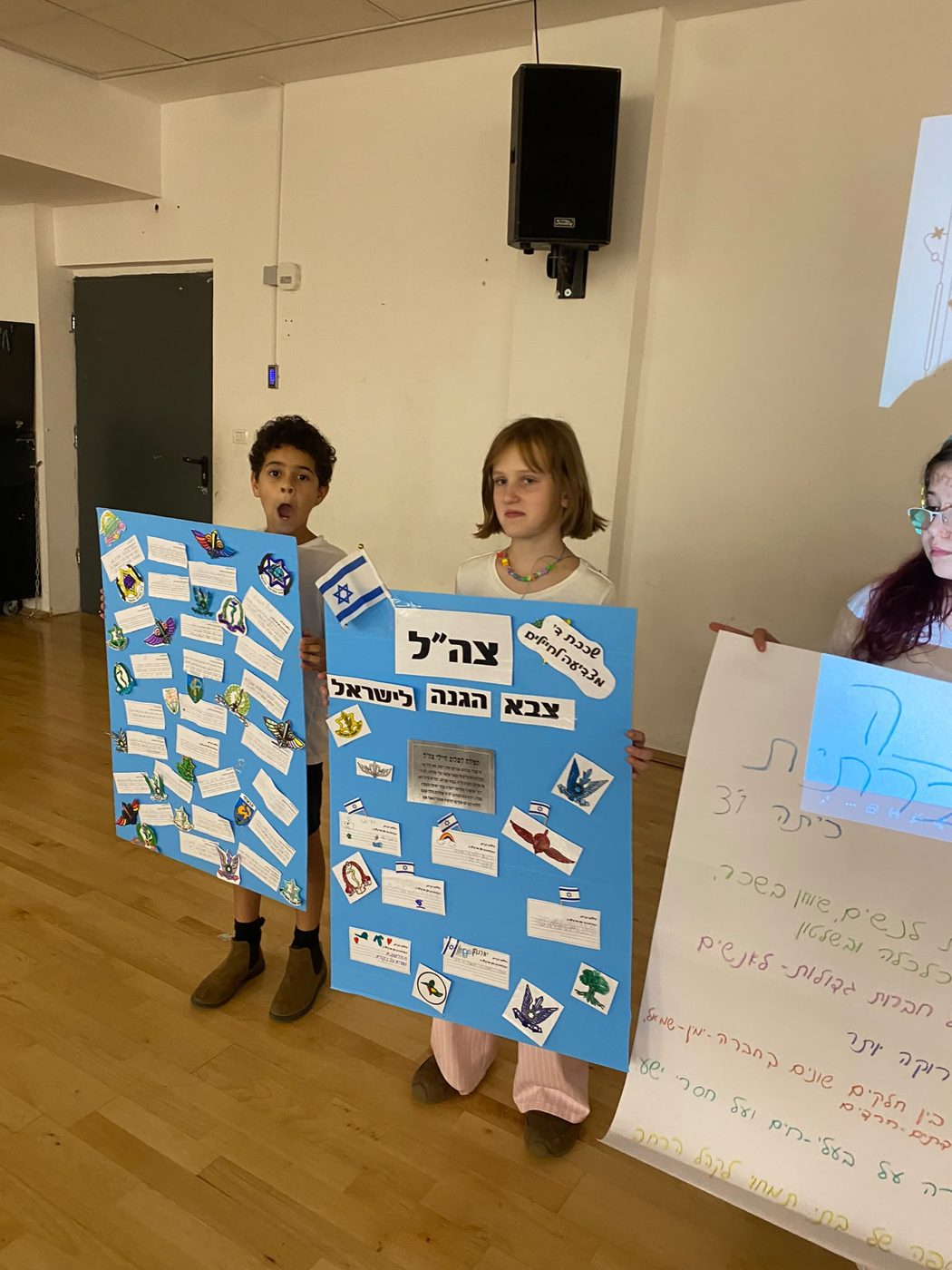
Grade 4 · appreciation and thanks to the security forces
Grade 5 · the anemone as a symbol of growth and renewal
Grade 6 · the strengths of Israeli society
Students in grades 3 to 6 gathered at the end of the day for a
shared assembly, for singing and for a prayer for the wellbeing of
the country.
The choice was to let the children meet the subject in different
ways, with sensitivity to their age and to their needs.
Not everyone in the classroom feels seen
At Geulim the week opens with a school wide gathering and a shared
viewing of a short film, which leads into a conversation. During the
month of Cheshvan we addressed, among other things, two subjects
that touch the lives of children and adults alike.
Invisible people: do we notice the person next to
us? The one nobody always talks to, the one who isn't always seen?
Peer pressure: what happens when everyone is doing
something we are not comfortable with? How do we choose differently?
These are not questions with a single correct answer. But it matters
that they have a place in the conversation. Social education does
not only happen when there is a problem to solve. It also happens
when time is set aside to talk about life itself.
Tradition meeting place
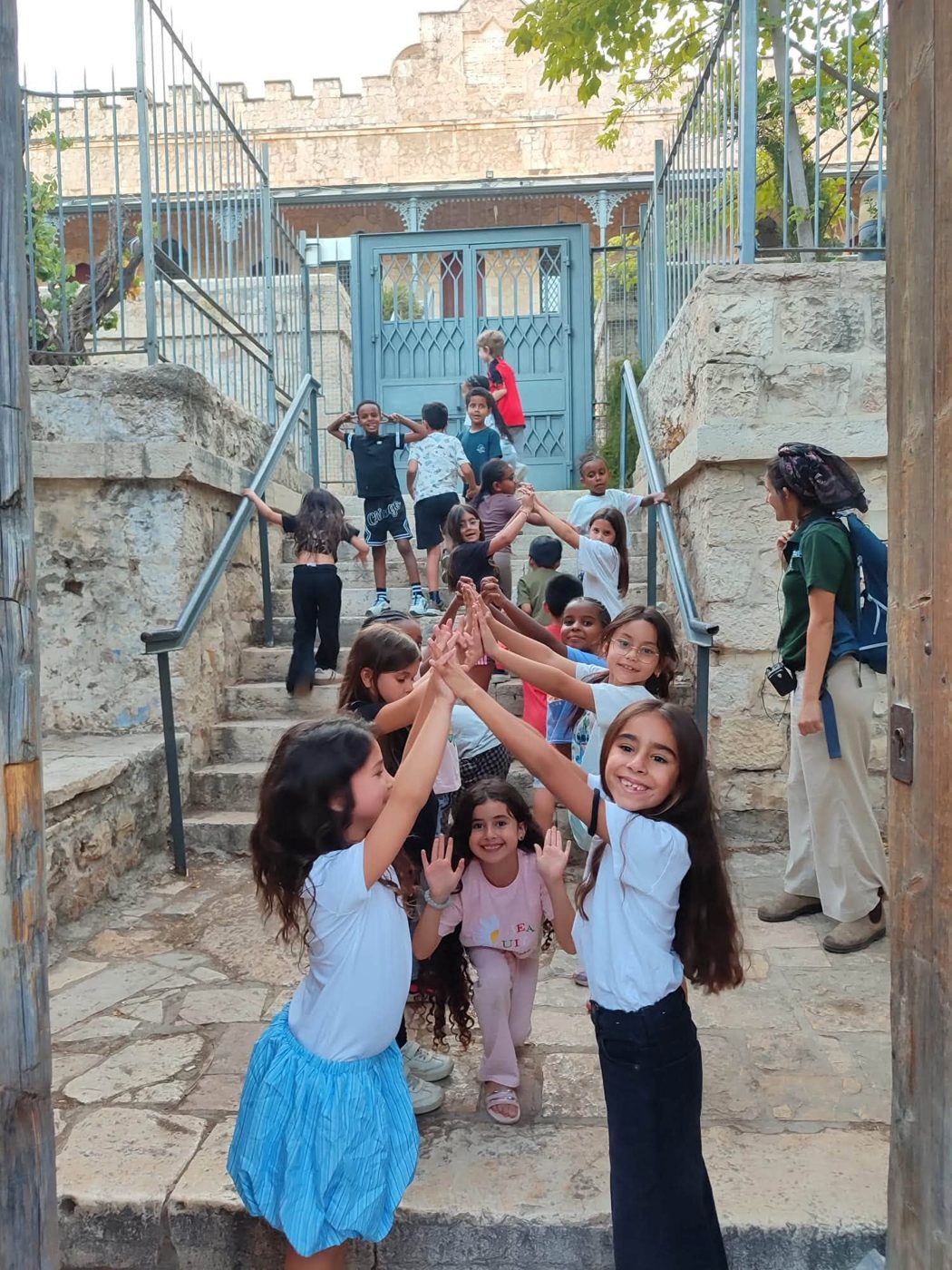
An arch of hands on Jerusalem steps, during the Slichot tour of grades 1 and 2
Ahead of the High Holy Days, students in grades 1 and 2, together
with the teaching staff and parents, went on a Slichot tour in
Jerusalem. They encountered the city during a special time of year,
through walking together and getting to know both the place and the
traditions of the season.
And ahead of the new month of Cheshvan, shared meals were held in
the classrooms, with the children in some of them preparing the food
themselves, including baking bread. Another way of connecting
tradition, learning and shared life.
05
What comes next?
The genuinely good things are built over time
The first two months were full of beginnings, but what is
interesting is what happens after them.
The Lego room is becoming part of school life. The kitchen is
entering the learning routine. The student council meets every week.
Outdoor learning continues to develop, the parent action groups are
starting to operate, and the various programmes let more children
find a place to express themselves.
Not everything has to be a big event. Sometimes the change is found
precisely in the things that happen every day.
And that is what we want to keep building at Geulim: a school with
room for initiative, for responsibility, for curiosity, for meeting
one another and for different ways to learn and to grow.
Looking for a school for next year?
If you live in Baka, in Arnona or nearby, we would be glad for you
to get to know Geulim. Come and see the spaces, meet the staff, hear
about the programmes and discover what life looks like at our
school. Leave your details and we will get back to you to arrange a
visit.
Thank you! We have received your details and will be in touch soon.
Your details are kept by us alone and used only to get in touch.